
Short answer
Buying in Eindhoven? Use this checklist to connect taxatie, NWWI, mortgage calculations, buying steps, documents, and adviser questions.
When I speak with buyers in Eindhoven, the same pattern comes back again and again. The viewing felt fast. The offer deadline came sooner than expected. The mortgage conversation started, then the taxatierapport suddenly became urgent.
That order creates stress.
A valuation report is one part of a larger chain: the offer, mortgage estimate, financing clause, NWWI requirements, property documents, adviser questions, and notary date. If you treat each piece as a separate task, small delays stack up. If you place them in one checklist before you bid, the buying process becomes much easier to control.
This guide gives general process information for buyers, homeowners, and expats in or around Eindhoven. Bring personal mortgage, tax, legal, and valuation decisions to your own adviser, notary, lender, or taxateur.
TL;DR
Before buying a home in Eindhoven, check the valuation and mortgage chain in this order: why the valuation is needed, what report type the lender expects, what your cautious mortgage estimate says, which dates sit in the purchase agreement, which documents must be ready, and which questions belong with the taxateur, adviser, and notary. A taxatierapport often appears late in the timeline, but it can affect the mortgage file, the deadline for financing, and the confidence of everyone at the overview.
The Quick Checklist
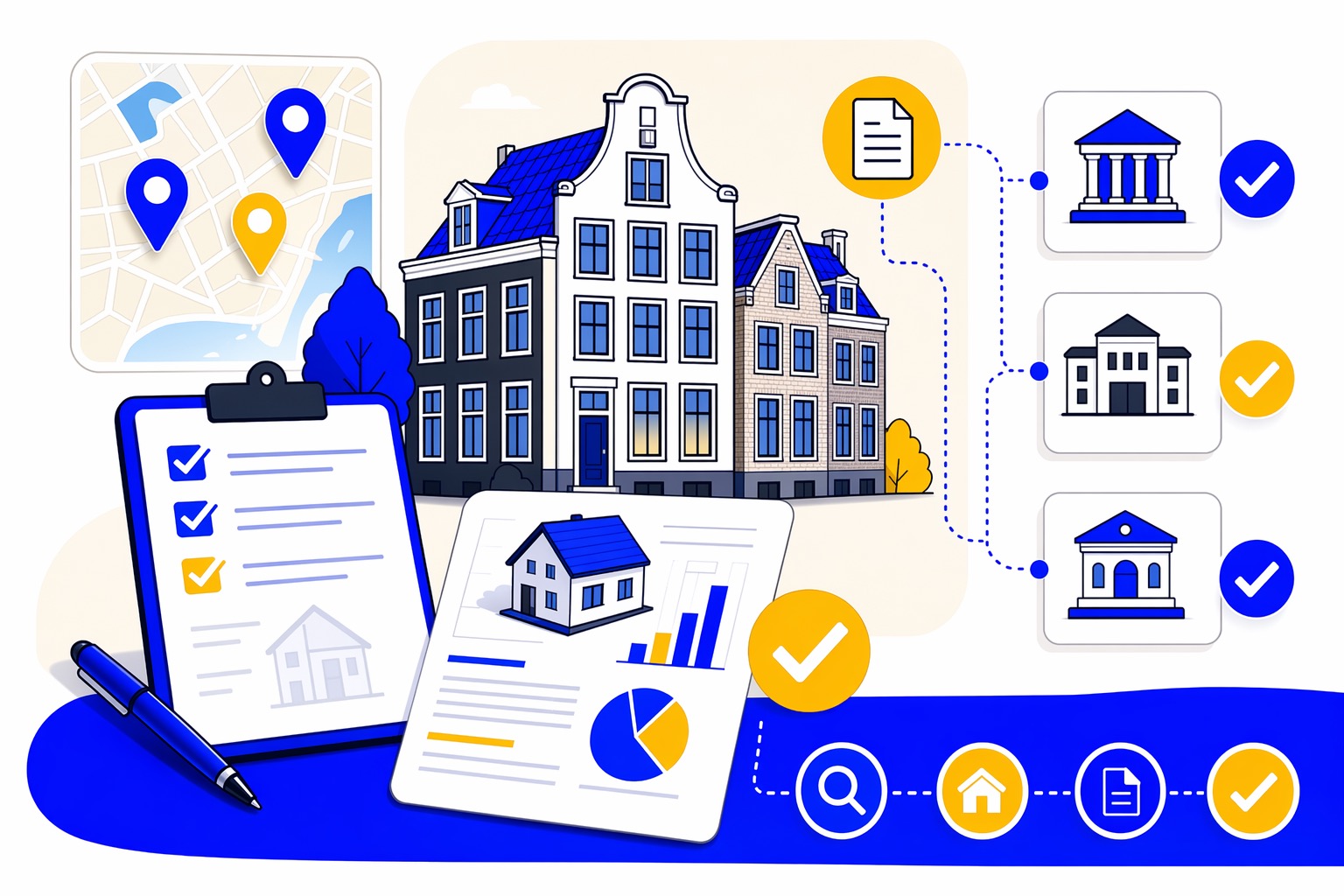
Use this first pass before you make an offer or sign anything.
Buying goal
First home, next home, refinance, renovation, sale before purchase
Buyer, partner, adviser
Valuation purpose
Mortgage, NHG, refinancing, renovation, divorce, inheritance, sale plan
Taxateur, adviser
Report type
Regular report, NWWI validated report, desktop option where accepted
Lender, adviser, taxateur
Mortgage estimate
Income, debts, savings, interest, expected property value, monthly comfort range
Mortgage adviser
Offer dates
Offer deadline, financing clause, bank guarantee, transfer date
Buying agent, adviser, notary
Property file
Energy label, VvE papers, permits, floor plans, renovation details
Seller, agent, VvE
Language needs
Dutch terms, English explanation, translated notes for a partner
Household, adviser, taxateur
Go/no-go point
The moment you pause if value, financing, or documents clash
Buyer and adviser
My advice is simple: write the chain down on one page. I have seen buyers remember the price and forget the date. I have seen people prepare the mortgage estimate and forget the report requirement. I have also seen expat households where one person understands the Dutch words and the other person signs from trust. A one-page checklist catches those gaps early.
Why The Valuation And Mortgage Chain Belong Together
A taxatie for a home purchase is rarely a stand-alone document. In the Dutch buying process, it often supports a mortgage file. The lender wants to know whether the property value supports the amount being borrowed. That is why the valuation can sit between the offer and the final mortgage approval.
The NHG explanation of property valuation says the taxatierapport establishes the market value under guidelines and that this value may be needed to take out a mortgage. NHG also explains that a mortgage can usually finance up to 100% of the market value of the home. That single boundary is enough reason to think about value before the pressure starts.
In my work, I prefer buyers to separate three numbers:
Asking price
What the seller wants
Sets negotiation context
Offer price
What you are willing to pay
Drives the purchase agreement
Market value in the report
The value assessed for the report purpose
Can affect mortgage sizing
These numbers can be close, but they are not the same thing. A competitive offer can sit above a cautious estimate. A valuation can support the loan, or it can create a new adviser conversation. The earlier you see the difference, the less likely you are to make a rushed decision.
Step 1: Decide What The Valuation Must Support
Start with the reason for the taxatie. I ask this before I think about documents, timing, or report details because the purpose decides the process.
Common reasons include:
- buying a home with a mortgage;
- refinancing an existing mortgage;
- renovating with extra borrowing;
- selling and buying again;
- dividing assets after divorce or inheritance;
- checking value before a sale decision;
- supporting an investment or life-event file.
For an Eindhoven buyer, the buying process is the most common. You find a home in Strijp, Gestel, Tongelre, Woensel, Stratum, Meerhoven, or a nearby village. Your offer is accepted. Your adviser asks for the valuation report. The financing deadline is already counting down.
The smoother process starts earlier. Before the offer, ask:
- Will the lender require a taxatierapport?
- Does the lender expect NWWI validation?
- Is there a financing clause and what date does it use?
- Is the property an apartment with VvE documents?
- Are renovations part of the plan?
- Does the household need English explanations of Dutch terms?
The NWWI explains that it validates residential valuation reports from affiliated taxateurs and checks that reports are prepared according to clear, uniform guidelines. If your adviser says the lender needs an NWWI validated report, place it in the timeline from the start instead of leaving it as a late document request.
A Simple Eindhoven Case
Imagine a buyer wants an apartment near Strijp-S. The price is high because demand is strong and the location is popular. The buyer has a mortgage estimate, but the estimate assumes a certain property value. If the final report gives a lower market value than the offer price, the buyer may need more own funds or a new adviser conversation.
The purchase may still work, but the buyer needs a calm plan before signing.
Step 2: Make A Cautious Mortgage Estimate Before The Offer
Before you think about winning the bid, check whether the monthly payments and loan size make sense under more than one scenario.
Use calculating a mortgage as a first way to make assumptions visible. Then take the result to a mortgage adviser who can check your personal situation, documents, debts, income type, and lender rules.
I like buyers to run 3 estimates:
Comfortable
Lower purchase price, steady interest, enough savings left
You can sleep after transfer
Expected
The offer you think you may need to make
Your likely adviser conversation
Strained
Higher bid, less own money, possible rate movement, delay in selling
Your pause point
The strained estimate matters because Dutch purchases can move quickly. If you already know your stop line, you are less likely to let emotion take over during bidding.
For expats, freelancers, business owners, or households with foreign income, the estimate needs extra care. A calculator gives orientation, but the adviser still needs to check what lenders accept. I have seen buyers with good income still face extra questions because income history, contract type, probation period, foreign documents, or self-employed figures needed more explanation.
What To Put Beside The Estimate
Keep these numbers next to the calculation:
- gross annual income for each borrower;
- contract type and start date;
- savings available after transfer tax, notary, adviser, valuation, moving, and furnishing costs;
- current debts and monthly obligations;
- expected interest rate range;
- expected energy label;
- expected VvE contribution for an apartment;
- renovation budget;
- expected sale proceeds if you are selling another home.
This is where I often see a gap. A buyer knows the maximum amount, then forgets buyer costs, VvE payments, or renovation cash. A taxatierapport helps with the property value. It cannot repair a stretched household budget.
Step 3: Place Buying Dates Beside The Taxatie
English-language guides for buying property in the Netherlands spend a lot of time on process because buyers need order. That fits what I see locally. The Dutch system is manageable once you map the dates.
For English-speaking buyers, the Dutch house buying process is worth checking before you rely on remembered advice from a friend, colleague, or old forum thread. The sequence matters: viewing, offer, purchase agreement, cooling-off period, financing clause, valuation, mortgage file, bank guarantee, notary preparation, deed, and transfer.
The Kadaster explains that the purchase process ends with a deed of transfer and registration. That sounds like the final step, but the notary date controls many earlier tasks. Work backward from that date.
Use this timing overview:
Before viewing
Know rough budget and neighbourhood limits
No report yet, but know likely value range
Before offer
Check mortgage estimate and financing clause
Ask adviser if valuation type is likely
After offer acceptance
Confirm report requirement fast
Book taxatie if needed
During mortgage file
Send documents and monitor deadlines
Report supports value file
Before bank guarantee
Check adviser has what lender needs
Missing report can delay certainty
Before transfer
Confirm final mortgage and notary path
Valuation should already be closed
The Financing Clause Date
Many buyers focus on the transfer date. I look first at the financing clause date. If the mortgage file needs a report and the report is delayed, that date becomes uncomfortable.
Ask your adviser:
- How long does the lender usually need after receiving the report?
- Does the lender accept this report type?
- Which date should appear in the financing clause?
- What happens if extra documents are requested?
- Who confirms when the valuation is received?
Write the answers in the same file as your offer notes. A buying agent, mortgage adviser, taxateur, and notary can each do their own task well, while the buyer still needs one overview.
Step 4: Prepare The Property File Early
A taxateur needs enough property information to understand the home. Some of it comes from inspection, some from documents, and some from context.
Prepare:
- address and ownership details;
- purchase agreement if already signed;
- floor plans or measurement report if available;
- energy label;
- VvE documents for apartments;
- renovation invoices or plans;
- permits or municipality documents where relevant;
- leasehold or special rights if they apply;
- list of maintenance work;
- photos or notes about changes since the listing;
- adviser or lender instructions.
The Consumentenbond mortgage document checklist is useful because it shows how many items can sit around both the mortgage application and the valuation. The more complete your file is, the easier it is for your adviser to see what is missing before the lender asks.
For apartments in Eindhoven, VvE documents deserve extra attention. Think about service costs, reserve fund, maintenance plans, insurance, meeting minutes, and possible future work. A clean apartment can still have a complicated VvE file. That can affect buyer confidence, mortgage review, and planning.
Energy Label And Renovation Notes
The Rijksoverheid explains that an energy label is required for most homes at sale, rental, or delivery, with some exceptions. Buyers should read the label before making assumptions about monthly costs, renovation plans, and borrowing room.
If you plan to renovate, write down what will change:
- insulation;
- glazing;
- heating;
- kitchen or bathroom;
- roof work;
- extension;
- solar panels;
- layout changes;
- structural work.
Then ask your adviser whether the lender needs a current-value view, a value-after-renovation view, or another setup. I cannot choose that for a buyer without the full mortgage context, but I can tell you that unclear renovation plans often slow the file.
Step 5: Know Which Valuation Process Fits
Dutch buyers may hear several terms: taxatie, taxatierapport, NWWI, desktop taxatie, hybrid valuation, WOZ, asking-price advice, and market value. These terms belong to different uses.
The Consumentenbond page on valuation options explains that a valuation can be needed when taking out or changing a mortgage, and that some situations may allow a cheaper desktop valuation. Your adviser and lender decide what process is acceptable for your case.
Here is a practical distinction:
Informal value view
Early orientation
Usually too light for a lender
WOZ value
Tax and municipality context
May differ from current market value
Desktop valuation
Some lender-approved cases
Acceptance depends on conditions
Physical taxatie
Many mortgage or property cases
Needs planning and access
NWWI validated report
Lender and NHG-related processes where required
Requires a taxateur and validation steps
Ask early which process fits the purchase. If the lender says physical NWWI valuation, book around that. If a desktop process may be accepted, still ask what happens if the lender later wants more.
What I Check As A Valuation Professional
In a residential valuation context, I look at the property, the location, the condition, comparable sales, legal and physical characteristics, apartment details where relevant, maintenance, energy features, and the stated purpose of the report. The report gives a professional opinion for a defined use. Future buyer, seller, and lender behaviour still sits outside that report.
That distinction protects buyers. A clear valuation report supports a file. It does not replace the mortgage adviser, legal adviser, building inspector, or notary.
Step 6: Make The Chain Bilingual If The Household Needs It
Eindhoven has many international households. One person may speak Dutch, another may read the mortgage offer in English first. One partner may know what voorbehoud van financiering means, while the other only understands it after a plain-language explanation.
When the household is international, put Dutch and English terms beside each other.
Taxatie
Property valuation
Often needed for mortgage review
Taxatierapport
Valuation report
The document sent into the file
Marktwaarde
Market value
Can affect loan size
Voorbehoud van financiering
Financing clause
Protects the buyer within agreed terms
Koopovereenkomst
Purchase agreement
Starts the signed purchase process
Leveringsakte
Deed of transfer
Used at transfer through the notary
VvE
Owners’ association
Matters for apartments
Energielabel
Energy label
Relevant for sale and affordability assumptions
For households that prefer English, use a Dutch mortgage calculator in English next to Dutch adviser notes. The aim is shared understanding. A calculator result should lead to better questions and a clearer adviser conversation.
I often ask buyers to explain the purchase back to each other:
- What are we buying?
- What is the offer price?
- What value do we need for the mortgage file?
- Which date protects us if financing takes longer?
- Which documents are missing?
- Which adviser gives which answer?
- Which decision waits until we receive written confirmation?
If one person cannot answer, slow down. A Dutch property purchase is too large for one household member to carry alone.
Step 7: Ask Better Questions Before You Sign
The right questions reduce pressure. Use these before the purchase agreement becomes the centre of your week.
Questions For Your Mortgage Adviser
- Which valuation report type does the lender expect?
- Does the lender require NWWI validation?
- How much time should we leave between valuation and financing deadline?
- Which documents are already complete?
- Which documents may create delays?
- What happens if the report value differs from the offer price?
- How much own money should remain after all buyer costs?
- Should renovation costs be part of the first mortgage discussion?
Questions For The Taxateur
- What is the purpose of the valuation?
- Which documents should I send before the visit?
- Does the report need NWWI validation?
- How are renovations or planned improvements handled?
- How long is the expected report process?
- Are there property details that often cause missing information?
- Does the report focus on residential use only?
Questions For The Buying Agent Or Seller’s Agent
- Which documents are already available?
- Is the energy label final and valid?
- Are VvE documents complete?
- Are permits, floor plans, or measurement reports available?
- Are there known defects, repairs, or planned works?
- Which dates are expected for signing and transfer?
Questions For The Notary
- Which date is planned for transfer?
- What information is needed from the buyer?
- When should mortgage documents be ready?
- Which funds must be transferred and by what date?
- Are there special legal details in the deed or property records?
Mistakes I Want Buyers To Avoid
I have seen these mistakes create avoidable pressure.
Mistake 1: Treating the calculator result as approval. A calculator is orientation. Approval depends on lender checks, documents, income, property value, and conditions.
Mistake 2: Booking the taxatie too late. If the lender needs a report, late booking can squeeze the financing clause date.
Mistake 3: Ignoring the difference between offer price and market value. The offer is your bid. The report has its own purpose and method.
Mistake 4: Forgetting VvE documents. Apartment buyers should ask for VvE papers early, especially in buildings with planned maintenance or higher monthly contributions.
Mistake 5: Letting one partner translate everything. In an international household, each person should understand the purchase process before signing.
Mistake 6: Leaving renovation details vague. Lenders and advisers may need clearer numbers if renovation affects the mortgage setup.
Mistake 7: Waiting to ask about NWWI. If validation is needed, place it in the timeline from day one.
A One-Page Valuation And Mortgage Chain Template
Copy this into a note and fill it in before you bid.
Property address
Neighbourhood
Asking price
Maximum offer you can still defend
Mortgage estimate used
Own money available after buyer costs
Adviser name and contact
Taxateur name and contact
Report type expected
NWWI needed?
Financing clause date
Bank guarantee date
Planned transfer date
Energy label
VvE monthly contribution
Missing documents
Questions still open
Personal pause point
The last item matters. Decide in advance when you pause. A missing report, unclear VvE file, stretched monthly payment, or unexplained renovation budget should trigger a new conversation before you move forward.
My Practical Order For Eindhoven Buyers
If I were helping a buyer prepare calmly, I would use this order:
- Get a cautious mortgage estimate.
- Choose the neighbourhood and property type you can defend financially.
- Ask which valuation process the lender is likely to need.
- View homes with the mortgage boundary already written down.
- Before bidding, check dates for financing and transfer.
- After acceptance, confirm report type with the adviser.
- Book the valuation process early.
- Send documents in one complete batch where possible.
- Keep English explanations beside Dutch terms when needed.
- Let the adviser confirm the mortgage file in writing.
This order gives each professional room to do their job. It also gives the buyer a way to see the whole file, rather than chasing separate pieces at the end.
FAQ
Do I need a valuation before making an offer in Eindhoven?
Usually the formal report comes after the offer is accepted, because the exact property and purchase details are then known. Still, you can discuss likely valuation requirements with your adviser before bidding. That helps you plan the financing clause and avoid late surprises.
Is an NWWI valuation always required for a Dutch mortgage?
No. The required process depends on the lender, mortgage type, property, loan-to-value, and adviser guidance. Many mortgage files use an NWWI validated report, but some cases may allow another process. Ask the lender or adviser before choosing.
Should I use a Dutch or English mortgage calculator first?
Use the language that helps the household understand the assumptions. A Dutch calculator can fit Dutch hypotheek terms. An English calculator can help expat buyers understand income, interest, monthly payment, and loan-size questions. In both cases, ask an adviser to check the result.
What documents should I prepare before the taxateur visits?
Prepare the purchase agreement if signed, floor plans, energy label, VvE documents for apartments, renovation details, permits where relevant, maintenance notes, and any adviser or lender instructions. More complete information usually means fewer follow-up questions.
Can a valuation change my mortgage plan?
Yes. If the reported market value differs from the amount assumed in your mortgage estimate, the adviser may need to adjust the file. That can affect own-money needs, lender review, or timing. Ask your adviser what happens if the value comes in lower than the offer price.
What should expat buyers ask before signing a purchase agreement?
Ask about the financing clause, cooling-off period, valuation process, NWWI requirement, notary date, energy label, VvE documents, translation needs, and which adviser gives written confirmation on each point. Every buyer should understand the same timeline before signing.
Final Check Before You Move Forward
Before you commit, read your one-page chain out loud. If the valuation purpose, mortgage estimate, documents, financing date, and report process all make sense together, you are in a stronger position. If one piece is unclear, pause and ask.
That pause can feel slow in a fast Eindhoven market. In my experience, it is much easier than repairing a rushed file after the deadline pressure starts.
Need a valuation report in Eindhoven?
Send the property address, adviser wording, deadline, and available documents so the valuation question can be checked before you book.
Request valuation