House Valuation in Elzent-Noord
A local Elzent-Noord property valuation guide with CBS and Funda market context, housing variation, schools, transport and mortgage checks.
This is a local market guide, not an individual property valuation or a mortgage offer. An official report must address the exact home, purpose, valuation date, lender wording and validation requirements.
Need a valuation in Elzent-Noord?
Speak directly with Dirk-Jan about your property, mortgage purpose and deadline. Request the report online.

Elzent-Noord in brief
Elzent-Noord has CBS neighbourhood code BU07722130 and sits in Eindhoven municipality’s Oud-Stratum district. Den Elzent, Elzentlaan, Tesselschadelaan and Bomanshof provide different housing and access contexts within the statistical boundary.
Your next step in Elzent-Noord
Local property market
Funda’s Elzent-Noord information page, checked on 24 August 2026, showed 14 homes for sale and 1 rental listing, with 1,170 residents in its portal profile. The portal snapshot reported an average asking price of €426,571, €5,102 per m² and an average selling time of 39 days, based on 21 homes sold in the previous 12 months. Walter Living’s August 2026 snapshot indicated that 23 of roughly 280 homes (about 8.5%) changed owner in the preceding year. These sources use different samples and definitions, so they should not be blended with CBS WOZ.
Current listing examples
Funda examples checked on 24 August 2026 show why this area needs careful comparability. Jan Smitzlaan 6-A was listed at €350,000 for 58 m² (label G); Bomanshof 203 at €400,000 for 95 m² (label D); Tesselschadelaan 8 at €669,000 for 127 m² (label A); Tesselschadelaan 12 at €567,500 for 91 m² (label A); Elzentlaan 125 at €500,000 for 105 m² (label B); and Bomanshof 207 at €300,000 for 52 m² (label B). A larger Knuvelderlaan 12 listing at €899,000 for 142 m² (label A+) and Elzentlaan 38 at €1.95m for 320 m² show the upper end. These are asking prices, not completed transactions; property type, size, energy label, legal context and street setting must be adjusted explicitly.
What drives value in Elzent-Noord?
A lender-facing report checks the legal address and cadastral situation, measurement basis, ownership or lease details, extensions and permits, maintenance, insulation, heating, energy label, outbuildings, parking, garden and plot. The Elzent-Noord corridor can require a different traffic and noise assessment from a quieter internal setting. Compact homes around Den Elzent and Elzentlaan also require careful checks on communal ground, ground rent and mortgageability.
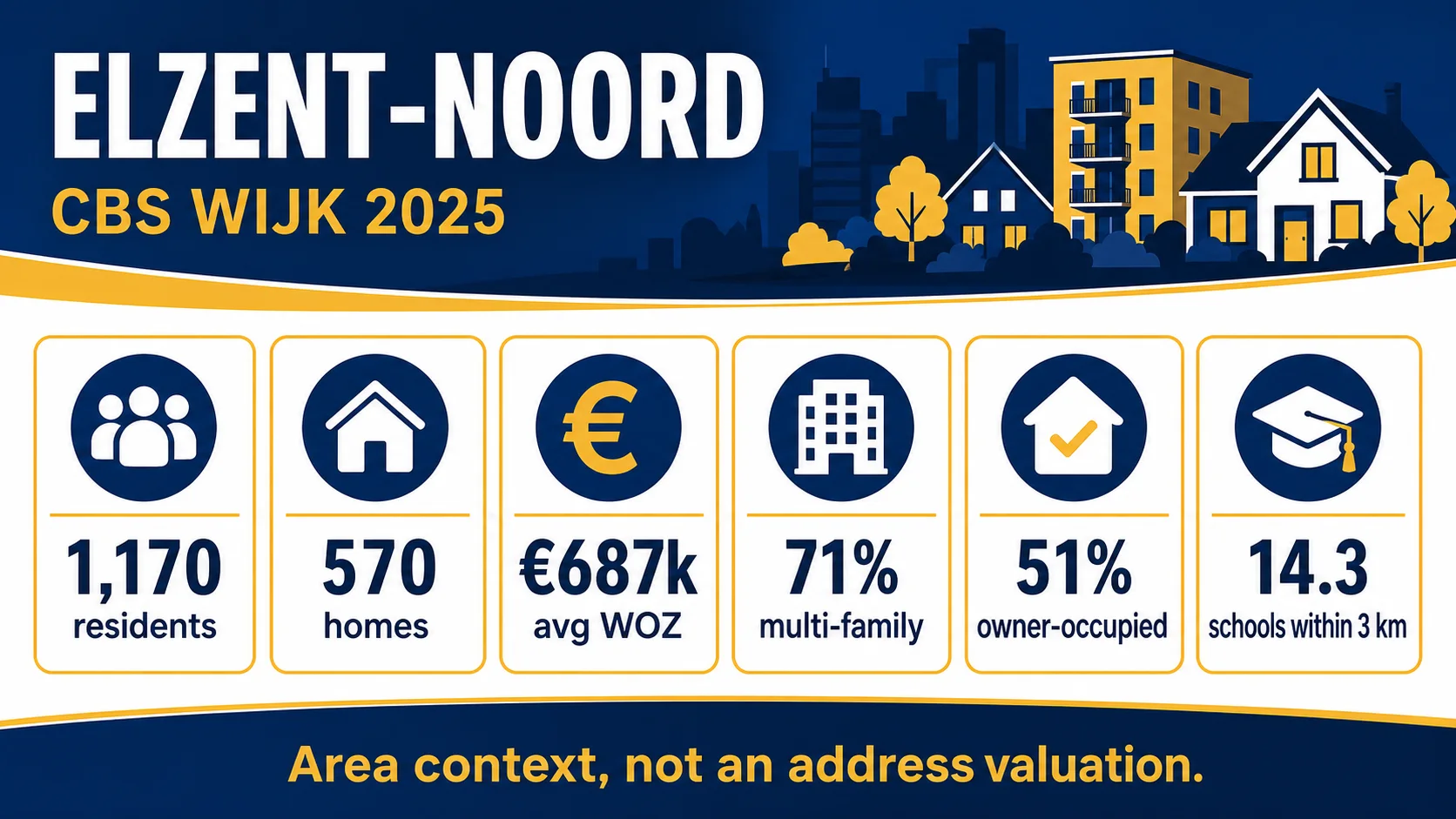
The 51% owner-occupied share is a neighbourhood statistic, not a prediction for a particular property. The CBS average WOZ of €687,000 is a mass-assessment context figure, not the market value for a mortgage date. A current report uses recent completed sales and the lender’s stated requirements.
Street-level variation
Den Elzent and Elzentlaan examples show smaller-to-mid-sized homes with useful plots. Elzent-Noord and Elzentlaan provide mid-size family-house comparisons. Tesselschadelaan and Bomanshof examples illustrate larger homes and different plot or energy profiles. Elzent-Noord frontage can add traffic and access questions. These contexts are descriptive, not separate statistical markets and not a street price ladder.
Living in Elzent-Noord
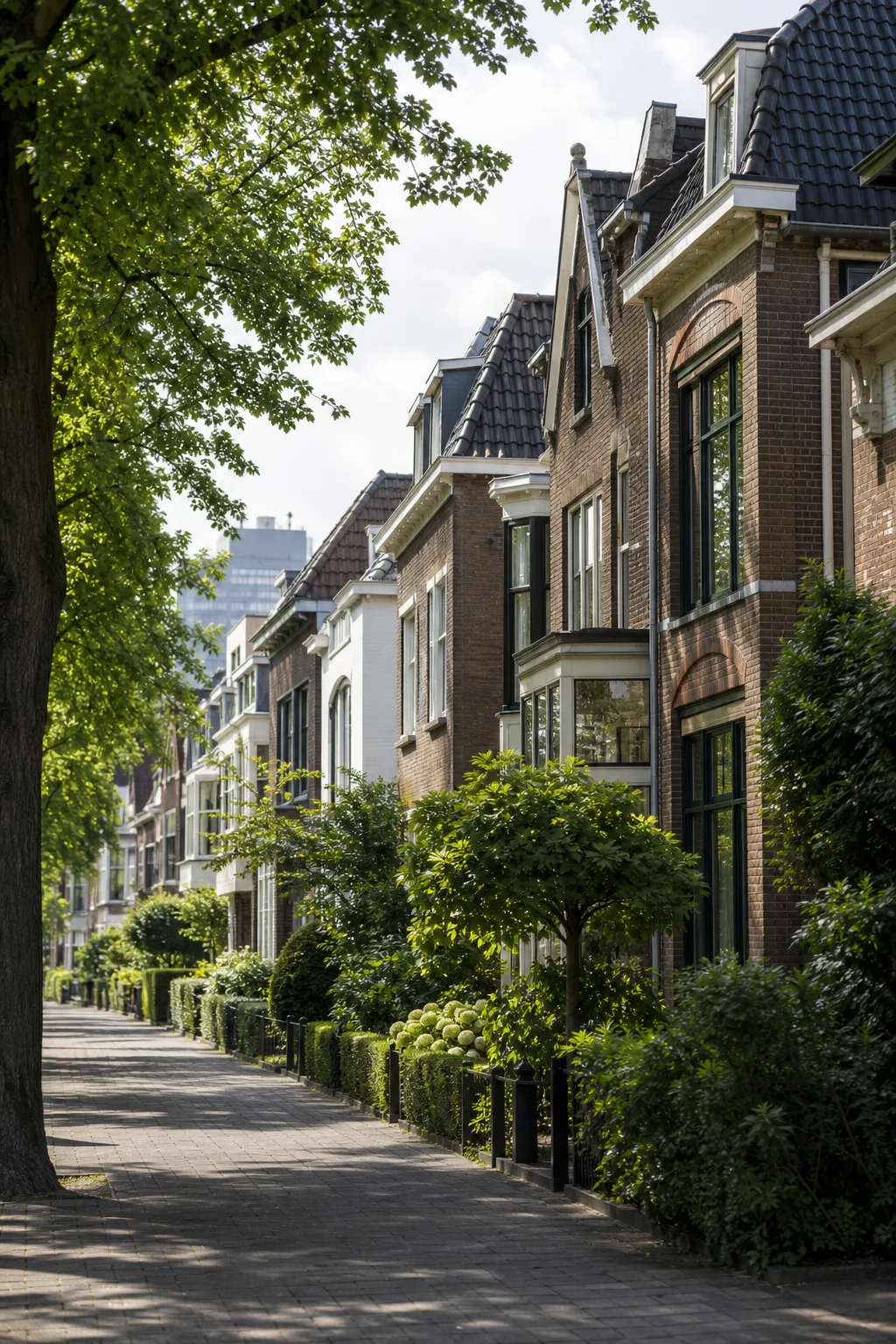
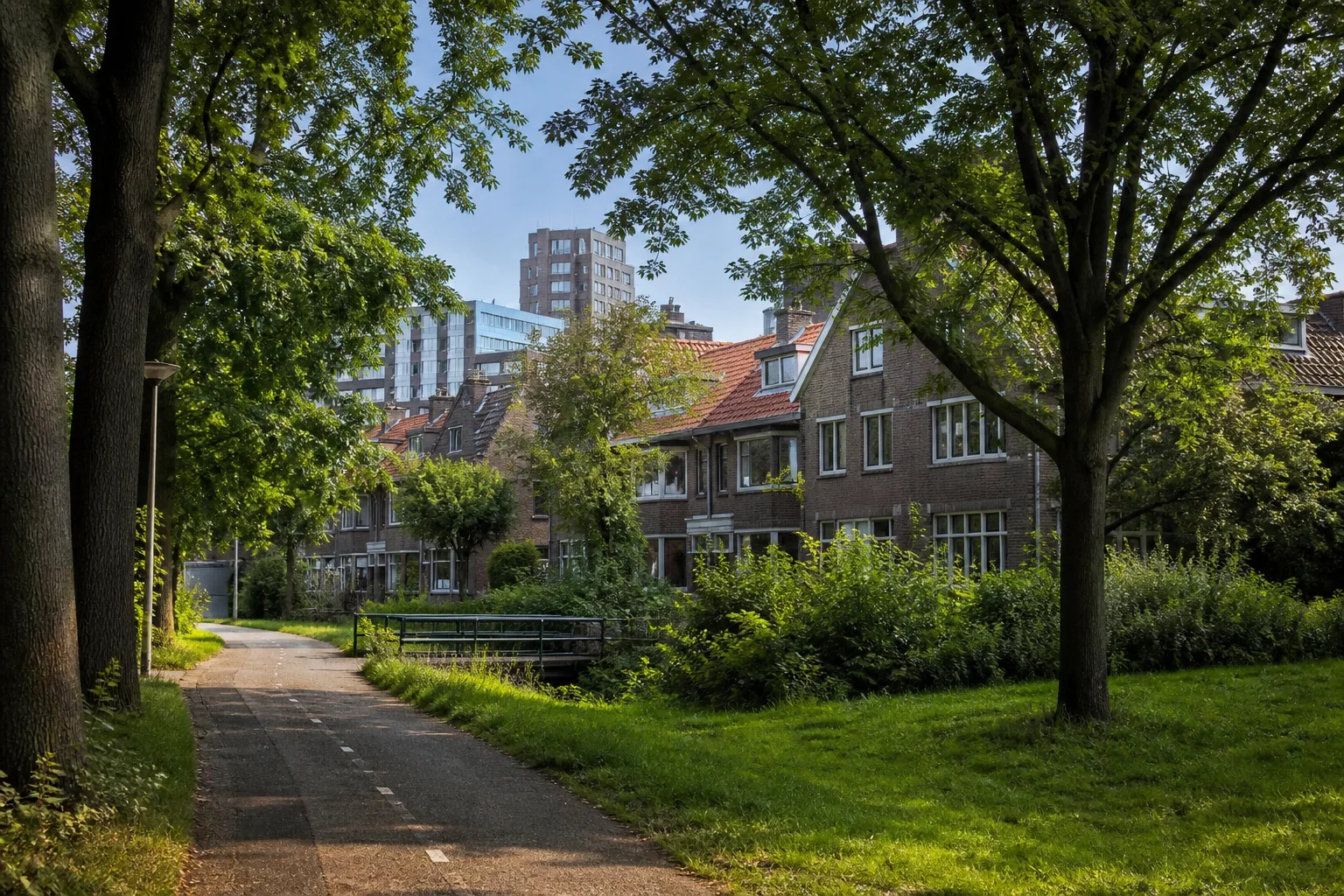
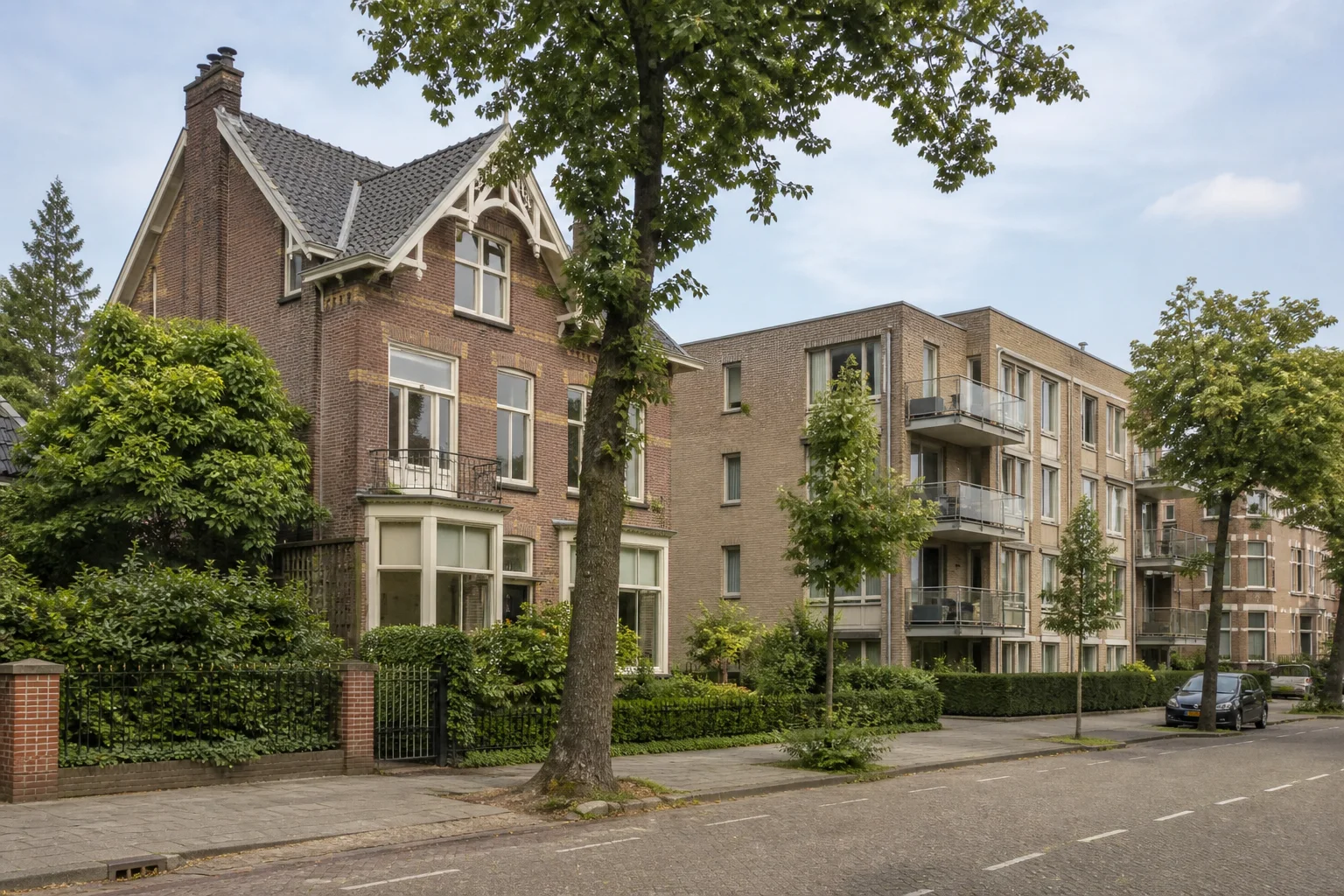
The neighbourhood combines apartment blocks around Bomanshof and Jan Smitzlaan with homes along Tesselschadelaan, Elzentlaan and the greener Den Elzent streets. This gives access to city-centre services and green connections, while parking, noise, outlook and maintenance depend on the exact address.
Schools, childcare and family context
CBS counts 14.3 schools within 3 km for the Elzent-Noord statistical area. The CBS profile places a GP about 0.2 km away, childcare about 0.7 km away and a school about 0.7 km away, with 14.3 schools within 3 km. Eindhoven International School and Van Maerlantlyceum are nearby reference points, but admissions, catchment, waiting lists and childcare availability must be confirmed with providers. Confirm admissions, catchment, waiting lists, childcare availability and travel arrangements directly with providers.
Safety and environment
The official police map and Atlas Leefomgeving are the right tools for checking an exact address. A neighbourhood-wide impression cannot guarantee personal safety, noise, air quality or environmental conditions; those can change by street, building orientation and date.
The school-zone traffic decision published in 2025, the Enexis neighbourhood-planning document and local Den Elzent information show why future traffic, utilities and public-space changes should be checked before a purchase. Planning notices are context, not guarantees about a particular plot; review the municipality’s current notices for the address.
Getting around
Elzent-Noord sits close to Eindhoven city-centre services and Eindhoven Centraal. Use official Bravo and 9292 planners for current bus and rail options for each address and travel day; walking, cycling, crossings and parking differ between the streets and apartment blocks.
Amenities and leisure
Local shops and services sit within the wider Oud-Stratum network, while green corridors and playgrounds provide everyday outdoor options. The CBS distances and municipal open-data points are useful orientation, not a promise that every amenity is open or on the same walking path. Check current opening hours and the exact path before moving.
Costs beyond the price
Budget for transfer tax where applicable, notary and mortgage-advice costs, lender valuation requirements, possible NWWI validation, inspection, insurance, municipal charges, energy upgrades, maintenance and renovation. Cheetah Valuations’ standard residential mortgage valuation is €599 including VAT, NWWI validation, cadastral research and normal-area travel. A rush option is €60 extra when the file and inspection timing allow. The exact report type and any extra work are confirmed before the appointment.
For an apartment, also allow for monthly VvE charges and possible contributions to planned façade, roof, lift or energy work. For a house, keep a reserve for maintenance and energy improvements that are not visible in an asking-price comparison. These ownership costs do not change the appraiser’s independent market-value conclusion, but they help you compare homes realistically and discuss the right documents during intake.
Before you rely on a valuation
This guide is local market context, not an individual property valuation, mortgage offer or guarantee of a sale price. The official report must address the exact home, purpose, valuation date, lender wording and validation requirements. If your lender asks for NWWI validation, confirm that before booking.
- Compare like with like: property type, living area, plot, condition, tenure, energy label, outdoor space and street setting.
- Use completed-sale evidence rather than asking prices alone.
- Check title, permits, land use, easements, noise, air quality, foundation, soil, water and nearby planning.
- Verify floor area, energy-label validity, renovation permissions and stated features.
- Keep the lender’s original wording and deadline available for intake.
Compare Elzent-Noord with nearby Eindhoven neighbourhoods
Property valuation guide for Witte Dame
CBS 2025 places Elzent-Noord at 1,170 residents, 570 homes, an average WOZ value of €687,000, 29% single-family homes and 51% owner-occupied homes. Witte Dame records 2,250 residents, 1,645 homes, an average WOZ value of €375,000 and 15% owner-occupied homes. These are different neighbourhood boundaries, so the figures are useful context rather than a direct price promise.
In the August 2026 Funda snapshots, Elzent-Noord showed 14 active listings and an average asking price of €426,571, while the checked Funda snapshot for Witte Dame did not publish an active-listing count; it reported an average asking price of €540,714. The €114,143 difference is a market snapshot, not a measured difference between two specific homes.
Average asking price per m² was €5,102 in Elzent-Noord and €5,688 in Witte Dame. Average selling time was 39 days versus 42 days. The per-m² gap and the time gap should be read with the housing mix, floor area, plot size and sample size in mind.
The pattern makes sense when the stock is considered: Elzent-Noord has 29% single-family homes and 51% owner-occupied homes, while Witte Dame has 15% owner-occupied homes. Larger detached homes, apartments, tenure, plot size, energy upgrades and street position can move an average more than the neighbourhood label itself. A higher portal figure does not by itself prove that one area is overvalued.
For a mortgage valuation, compare the exact home in Elzent-Noord with genuinely similar evidence in Witte Dame only when type, size, plot, condition, energy label, parking or VvE, legal title, valuation date and purpose line up. The figures help frame the conversation; they do not replace the inspection and lender-specific report.
Property valuation guide for Joriskwartier
CBS 2025 places Elzent-Noord at 1,170 residents, 570 homes, an average WOZ value of €687,000, 29% single-family homes and 51% owner-occupied homes. Joriskwartier records 1,340 residents, 670 homes, an average WOZ value of €376,000, 50% single-family homes and 46% owner-occupied homes. These are different neighbourhood boundaries, so the figures are useful context rather than a direct price promise.
In the August 2026 Funda snapshots, Elzent-Noord showed 14 active listings and an average asking price of €426,571, while Joriskwartier showed 7 active listings at €533,393. The €106,822 difference is a market snapshot, not a measured difference between two specific homes.
Average asking price per m² was €5,102 in Elzent-Noord and €4,778 in Joriskwartier. Average selling time was 39 days versus 25 days. The per-m² gap and the time gap should be read with the housing mix, floor area, plot size and sample size in mind.
The pattern makes sense when the stock is considered: Elzent-Noord has 29% single-family homes and 51% owner-occupied homes, while Joriskwartier has 50% single-family homes and 46% owner-occupied homes. Larger detached homes, apartments, tenure, plot size, energy upgrades and street position can move an average more than the neighbourhood label itself. A higher portal figure does not by itself prove that one area is overvalued.
For a mortgage valuation, compare the exact home in Elzent-Noord with genuinely similar evidence in Joriskwartier only when type, size, plot, condition, energy label, parking or VvE, legal title, valuation date and purpose line up. The figures help frame the conversation; they do not replace the inspection and lender-specific report.
Property valuation guide for Roosten
CBS 2025 places Elzent-Noord at 1,170 residents, 570 homes, an average WOZ value of €687,000, 29% single-family homes and 51% owner-occupied homes. Roosten records 800 residents, 264 homes, an average WOZ value of €918,000, 100% single-family homes and 98% owner-occupied homes. These are different neighbourhood boundaries, so the figures are useful context rather than a direct price promise.
The August 2026 Funda snapshot showed 14 active listings in Elzent-Noord at an average asking price of €426,571. For Roosten, the checked profile showed 5 active listings and did not publish an average asking price in that snapshot, so a price-level comparison would overstate what the evidence can show.
The portal measures add useful texture: Elzent-Noord reported €5,102 per m². These are dated asking-price or portal measures and do not replace a comparable completed sale.
The pattern makes sense when the stock is considered: Elzent-Noord has 29% single-family homes and 51% owner-occupied homes, while Roosten has 100% single-family homes and 98% owner-occupied homes. Larger detached homes, apartments, tenure, plot size, energy upgrades and street position can move an average more than the neighbourhood label itself. A higher portal figure does not by itself prove that one area is overvalued.
For a mortgage valuation, compare the exact home in Elzent-Noord with genuinely similar evidence in Roosten only when type, size, plot, condition, energy label, parking or VvE, legal title, valuation date and purpose line up. The figures help frame the conversation; they do not replace the inspection and lender-specific report.
Questions buyers and homeowners ask
Is Elzent-Noord a good place to buy a home?
It can suit buyers who want established Eindhoven housing, Oud-Stratum amenities and a mix of family streets, apartments and greener edges. The right choice depends on the exact street, condition, transport needs, tenure and lender requirements.
What does a valuation in Elzent-Noord cost?
The standard validated residential mortgage valuation is €599 including VAT, NWWI validation, cadastral research and normal-area travel. Confirm the report purpose and any rush requirement before booking.
How quickly can the report be delivered?
After inspection, a complete standard file is normally delivered within 48 hours. A 24-hour option can be requested for €60 extra when access, documents and validation timing allow.
Does a higher asking price mean a higher mortgage valuation?
No. Asking price is a seller’s market position. The report considers the address, condition, legal and physical characteristics, comparable completed sales, purpose and valuation date.
Does the Elzent-Noord location change what is checked?
It can. Traffic, noise, frontage, access, parking and market comparables should be assessed for the exact address. A quiet internal street is not automatically comparable with a busy connector.
Can a valuation be arranged in the evening or at a weekend?
Online requests are available 24/7 and calls are handled from 09:00 to 21:00, seven days a week, subject to appointment availability and access to the property.
Request a mortgage valuation · View valuation services · About Cheetah Valuations
How should the different market snapshots be read?
The Funda snapshot is closest to a live view of homes being marketed, but it is still an asking-price view. The 14 homes for sale and 1 rental listing shown on the checked Funda profile describe portal activity around that date; they do not describe every Elzent-Noord home or predict a sale time. A listing can be withdrawn, relisted, or sold after a period that is not visible in the initial asking data. A current valuation therefore needs completed-sale evidence and a reasoned adjustment for the subject home.
Live portal counts can change as listings are added, withdrawn or sold. Funda’s asking-price sample and Walter Living’s turnover snapshot use different methods from CBS; CBS WOZ is a statutory mass-assessment measure. A portal number can orient a buyer, but it should not be presented to a lender as the value of a specific address.
For a buyer, the practical lesson is to keep the figures beside their definitions. Ask whether a number is an asking price, a completed sale, a model estimate, a WOZ value, a per-square-metre figure or a time-to-sale statistic. Ask for the checked date and sample size. Two figures that look similar can still answer different questions. This prevents an attractive portal average from becoming an unrealistic budget assumption.
For a seller, a portal average can help explain the market conversation but does not replace an independent valuation. A well-presented, efficient home with a generous plot may attract a different buyer group from a compact apartment or a home exposed to traffic. The valuation report should show why the selected comparables are similar and which differences have been considered.
Why does the Elzent-Noord edge need a different comparison?
The Elzent-Noord is a useful orientation line, not a separate statistical market. Frontage, traffic noise, access, parking movements, privacy and daylight can differ from an internal residential street even when two homes have similar floor areas. Those differences may affect buyer demand, the selection of comparable sales and the explanation of adjustments in a lender report. A home near a junction or busy crossing should be inspected in its actual setting rather than judged from a postcode average.
Internal streets also vary. A house with a south-facing garden, a quiet rear outlook or an upgraded energy system may compare differently from a similar-sized home with a smaller plot, shared access or deferred maintenance. Apartment groups add questions about the VvE, service costs, reserve fund, maintenance plan and ownership of shared areas. The same neighbourhood name can therefore contain several practical comparison sets.
When you shortlist evidence, record the address, property type, living area, plot, number of rooms, energy label, visible condition, outdoor space, parking and street setting. Note whether the listing is a row house, corner house, apartment or detached home. This simple record reduces the risk of comparing a renovated larger home with a smaller property simply because both appear in the same portal search.
What should a buyer check before making an offer?
Start with the reason a valuation may be needed. A lender may require an NWWI-validated report, a report for a purchase mortgage, a refinancing or mortgage increase, or a report connected to renovation. The wording in the mortgage file matters because the appraiser must address the stated purpose and valuation date. Keep the lender or adviser request available before an appointment.
For the home itself, check the measured living area, plot boundary, ownership or lease position, energy label, visible maintenance and any extensions or outbuildings. Ask for permits and drawings where work has changed the layout. Check whether parking, a garden, storage room or roof space is legally part of the property. For apartments, obtain the VvE budget, reserve position, minutes, maintenance plan and any planned major works.
Elzent-Noord buyers should also spend time at the exact address at more than one moment of the day. Listen for traffic, school activity and delivery movements; check the parking situation; look at the outlook from the main rooms and garden; and note walking access to the services you actually use. These observations do not set the value on their own, but they help you ask the right questions and select genuinely comparable homes.
What can a seller prepare for a valuation?
A clear file makes the appointment more useful. Gather the property address, purchase or ownership information, floor plans, measurement report if available, energy label, permits, invoices for significant works, renovation specifications and details of solar panels, insulation, heating or other energy improvements. If the home is an apartment, add the VvE documents and information about service charges or planned maintenance.
Explain what has changed since purchase and which work is complete, underway or only planned. A quote for future work is not the same as completed condition, and a total renovation budget does not automatically add the same amount to market value. The report needs to describe what can be observed and documented at the valuation date. Be ready to explain access to every room, loft, storage space and garden.
Avoid presenting the current asking price as proof of value. A seller’s price reflects strategy, timing and marketing as well as the property. The independent report considers the exact home, its legal and physical characteristics, recent completed comparable sales and the stated purpose. Good preparation helps the appraiser verify facts; it does not turn an unsupported figure into a lender conclusion.
How do NWWI and lender requirements affect the report?
NWWI validation is a quality-control process for a mortgage valuation report. The lender or adviser may specify the required report type, validation and purpose before the inspection. During intake, Dirk-Jan checks that wording, the deadline and the documents so the report is prepared for the correct use. If the request changes from purchase to refinancing or renovation, say so before the appointment.
The appraiser still has to form an independent opinion. A preferred purchase price, an estate-agent estimate or a buyer’s financing target does not determine the result. The report must explain the market value using the property’s condition, size, legal position, energy performance, location, comparable evidence and valuation date. In Elzent-Noord, that can include the difference between an internal residential street, an Elzentlaan-facing home, an apartment setting and a green-edge address.
Have the lender’s original wording ready, together with the purchase agreement or refinancing question, property documents, renovation information and any known deadline. A complete intake reduces avoidable follow-up. It also lets you decide whether the standard delivery promise after inspection is suitable or whether a rush option should be discussed. The €599 standard fee includes VAT, NWWI validation, cadastral research and normal-area travel; a 24-hour option is €60 extra when the file and inspection timing allow.
What do the local distances mean for daily life?
CBS’s average distances are useful orientation, not walking-time guarantees. The 0.2 km GP, 0.4 km supermarket, 0.7 km childcare and 0.7 km school figures are calculated across the neighbourhood and use a defined measurement method. Your actual walking connection, crossing, pavement, cycle connection, opening hours and school catchment can be different. The 14.3 schools within 3 km is a statistical count, not a promise of a place at a particular school.
The municipality’s published decisions and provider information add current context. Families should confirm admissions, childcare availability, traffic arrangements and construction timing directly with the municipality and providers. Check the address on the current police map for safety information rather than treating a neighbourhood-wide impression as a guarantee.
Use the official Bravo planner or 9292 for current departures, stops and travel times; service patterns change by date, time and holiday period.
What should be discussed during the intake call?
Bring five answers: the property address; why the report is needed; what the lender or adviser has requested; when the report is needed; and which documents or renovation plans are already available. Mention whether you are buying, refinancing, increasing a mortgage, renovating or checking a private decision. This lets Dirk-Jan identify the correct report form before the inspection.
Also mention practical access. Tell him about tenants, shared entrances, locked storage, roof spaces, outbuildings, pets, parking restrictions or works in progress. If the home is an apartment, say where the VvE documents can be found. If a deadline falls near a weekend or public holiday, raise it at intake so the inspection and validation sequence can be planned realistically.
Calls are handled from 09:00 to 21:00, seven days a week, and the online form is available 24/7. A response during opening hours is not the same as report delivery: the report timing starts after a complete inspection and file. Clear information at the start is the quickest way to avoid a later request for missing wording or documents.
How should CBS figures be used in a valuation conversation?
The CBS row is valuable because it defines the neighbourhood consistently, but it is not designed to price one address. Residents, households, homes, WOZ, housing type, tenure, density and average distances describe the area as a whole. They help a buyer understand the setting and help an appraiser explain why a portal average may not fit a particular street. They do not replace a recent sale of a genuinely comparable property.
For example, 29% single-family homes tells you that family houses form a large part of the stock, while the 71% multi-family share shows why apartment evidence can also matter. The 51% owner-occupied share and 49% rental complement describe tenure in the statistical population, not the tenure of the home you are viewing. The €687,000 average WOZ is useful background but has a different valuation date and purpose from a mortgage report. Keep those distinctions visible when discussing a budget or an offer.
How can energy and renovation change the comparison?
Energy label, insulation, heating system, glazing and solar panels can influence running costs, buyer demand and the selection of comparable evidence. A home with label A or A+ may not be interchangeable with a similar-sized home with label D, especially when the latter needs documented work. The effect depends on the quality and legal status of the work, the age of the installation, the layout and the market evidence available at the valuation date.
Renovation plans should be described precisely. A contractor quotation, a planning permission, completed work and an idea still on a wish list are four different states. Keep invoices, permits, drawings and specifications together. For a mortgage report, the appraiser must establish what exists and what can reasonably be supported, not simply add a proposed budget to a market average. This is particularly important where a loft conversion, extension, insulation package or garden room changes the usable area or legal description.
What extra checks apply to an apartment?
Apartments in Elzent-Noord bring shared ownership and VvE questions. Ask for the deed, service-charge budget, reserve fund, long-term maintenance plan, recent minutes, insurance and information about planned works. Confirm which storage, parking and outdoor areas belong to the apartment and which are shared. A low service charge can look attractive but may sit beside an underfunded reserve; a higher charge can include useful maintenance or energy work.
The appraiser also needs to understand the building’s condition and the legal position of the unit. A comparable apartment should have a similar size, floor, outlook, service-charge structure, energy performance and maintenance context. A family house on an internal street is not a direct substitute for an apartment near Elzent-Noord, even when the asking price per m² appears similar.
Which legal and environmental questions are worth checking?
Before relying on a valuation, check the cadastral boundary, ownership or lease position, easements, permits, land use, known soil or foundation concerns, noise, air quality, water and nearby plans. The local market guide can point you to the questions, but an address-level report and official searches must answer them for the specific property. A municipal area approach or an open-data project is context, not proof that a particular home will be affected.
For Elzent-Noord, the Elzent-Noord edge, school activity, green projects and the municipality’s Elzent-Noord and Oud-Stratum-buiten planning documents are sensible items to review. Check official notices for the date of your decision, and ask the seller for documents that affect the home. If a housing-purchase rule or other legal restriction may apply, confirm the current position with the municipality or a qualified adviser rather than relying on an old listing description.
How do you choose a useful comparable sale?
Start with the same purpose and valuation date. Then narrow by property type, living area, plot, room count, construction period, condition, energy performance, outdoor space, parking and street setting. A recently completed sale on a similar internal street can be more informative than a higher-priced listing on a busy edge. Three or more varied listing examples can show the available range, but they are not substitutes for completed transactions.
Record the differences rather than hiding them. Note whether the comparable is larger, more efficient, recently renovated, on a deeper plot, exposed to traffic or part of a VvE. Explain why it remains useful and which adjustment questions remain open. This approach gives buyers and sellers a clearer conversation and gives the lender a reasoned valuation file instead of a single headline number.
How does tenure affect a buyer’s decision?
The neighbourhood’s tenure mix is useful context when you think about the type of housing around an address, but it does not predict the legal position of the home you are buying. Confirm whether the property is owner-occupied, rented, leasehold or subject to another arrangement. For an apartment, check the VvE and the division deed. For a house, confirm the cadastral plot, access, storage and any shared passage. These details can affect the report and the practical decision even when two homes look similar from the street.
A buyer should also distinguish the monthly cost of owning the home from the amount a lender is willing to finance. Mortgage interest, repayment, VvE charges, insurance, municipal charges, maintenance and energy costs all sit outside a headline asking price. A strong energy label may reduce running costs, while an older roof, boiler or façade may require a reserve. Ask which facts are documented and which are assumptions before using an online estimate in your budget.
How should inspection and report timing be planned?
The online form is available at any time, but a complete report still depends on access to the property, the lender’s wording, required documents and the validation sequence. Send the address, purpose and deadline early. If a purchase agreement, renovation plan or VvE file is still missing, say so during intake rather than waiting until the inspection. The earlier the missing item is known, the easier it is to choose a realistic appointment.
Calls are available from 09:00 to 21:00, seven days a week, including weekends and public holidays. The standard residential valuation is €599 including VAT, NWWI validation, cadastral research and normal-area travel. After inspection, the complete standard file is normally delivered within 48 hours when access, documents and agreed requirements are complete. A 24-hour option costs €60 extra when the timing and validation process allow it. These are service commitments for a complete file, not a promise to bypass lender or legal requirements.
What does this local guide not tell you?
It cannot tell you the value of a home without the address-level inspection and evidence that belongs to that home. It cannot guarantee a sale price, a mortgage decision, a school place, a parking space, a journey time or future safety. It cannot replace title checks, permits, environmental information, the lender’s requirements or professional legal advice. Treat the guide as a structured starting point for questions.
It also cannot turn every visible difference into a precise euro adjustment. A garden, a quiet outlook, a renovated kitchen, a VvE reserve or traffic exposure may matter, but the effect depends on comparable market evidence and the valuation date. The official report should make that reasoning visible. If the property is unusual, recently renovated, split into multiple units or affected by a planned change, mention it before the appointment so the scope is clear.
How does Elzent-Noord differ from the other Oud-Stratum neighbourhoods?
Elzent-Noord and the other Oud-Stratum neighbourhoods are separate CBS neighbourhoods with different codes and housing profiles. Adjacent Oud-Stratum neighbourhoods have their own CBS codes and housing profiles; compare them only after checking the exact boundary, building type and purpose of the valuation. A valuation should still use address- and property-specific comparables rather than a blended area average.
Which documents should a buyer prepare?
Prepare the address, purchase agreement if available, lender or adviser wording, deadline, known renovation information, permits and relevant property documents. Dirk-Jan checks the requested report type during intake.
How can a buyer compare a home near a green edge with one on a connector?
Begin with the physical facts that can be measured: living area, plot, room count, construction period, condition, energy performance, parking, storage and outdoor space. Then describe the setting in plain terms. Is the home beside a green connection, a school, a bus stop, a busy road or a quiet internal street? Can the main rooms and garden be overlooked? Is access shared? Does traffic change at school times? These questions help the appraiser select evidence that reflects the actual home rather than the neighbourhood label alone.
Use more than one comparable and keep the differences visible. A listing on the Elzent-Noord edge may be a useful upper or lower reference, but frontage and noise should be discussed. A family house near Den Elzent or Elzentlaan may have a different plot and parking pattern from a Elzent-Noord or Elzentlaan home. An apartment group brings VvE and building-maintenance questions that do not apply to a detached house. The purpose is not to create a street ranking; it is to explain why the evidence is or is not a good fit.
What should you keep after the valuation?
Keep the final report, the lender’s instructions, the purchase agreement, measurement and energy documents, permits, renovation evidence and the comparable-sales explanation together. If a lender asks a follow-up question, the original wording and report date should be easy to find. If the report is used for refinancing or a mortgage increase later, check whether the lender needs a new valuation because the purpose or date has changed.
The report is tied to the property, purpose and valuation date. A later renovation, market change, legal change, new VvE decision or planning notice can make an older report less useful. Do not present a local guide, WOZ figure, portal asking price or past report as a permanent guarantee. Use the guide to frame the next question, then request an updated professional report when the lender or decision requires one.
How does Elzent-Noord fit an Eindhoven search?
Elzent-Noord can be a practical option for people who want an established Eindhoven address with access to Oud-Stratum services, family housing, apartments and greener southern connections. The neighbourhood is not one uniform product: a buyer looking for a quiet garden, an apartment with a strong VvE or a home close to a particular school may find a different shortlist within the same CBS boundary. Compare the actual streets and homes rather than treating the neighbourhood name as a guarantee.
For a valuation, the useful outcome is a clear explanation of which evidence fits the home and which evidence does not. Keep your priorities—space, energy performance, parking, outdoor area, public transport, school access and budget—visible during the search. Then bring the lender’s wording and the address to intake so the report can be prepared for the correct purpose. If your shortlist changes from a family house to an apartment or from an internal street to the Elzent-Noord edge, update the questions and documents rather than carrying assumptions from the first property.
To compare this area with nearby towns and neighbourhoods, visit the Eindhoven property valuation comparison hub.